
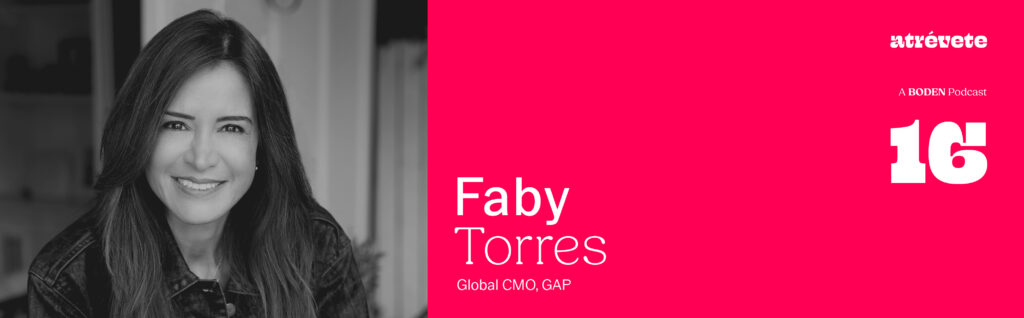
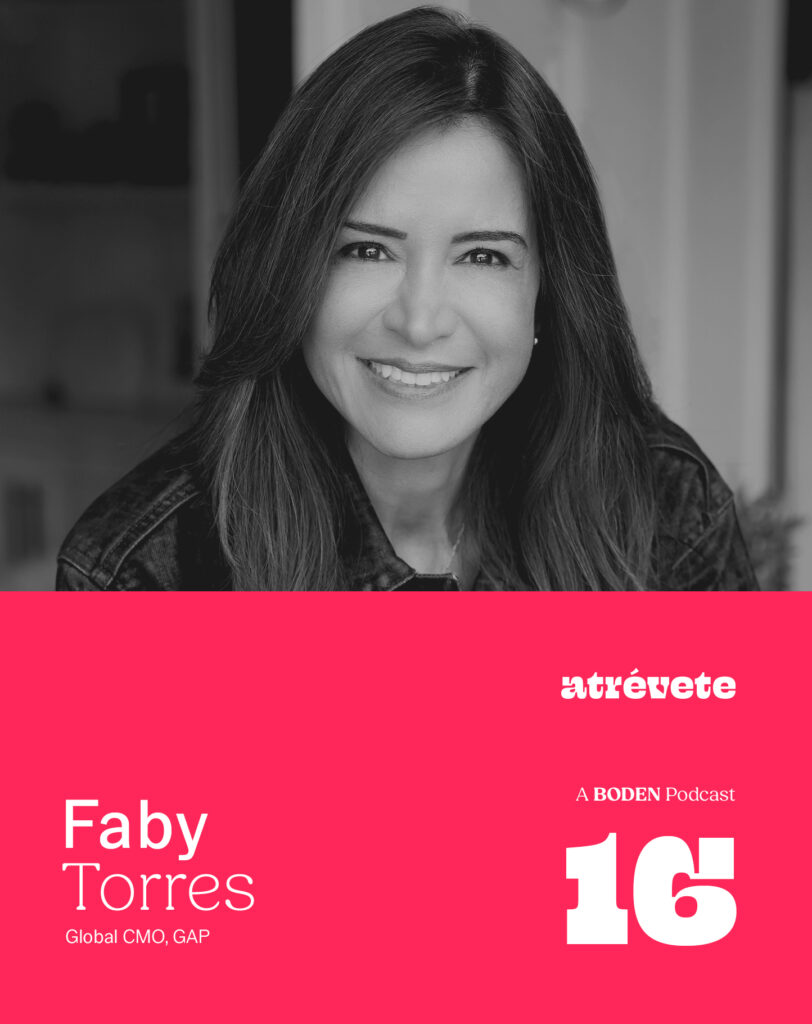
NB: How, as a Latina, has your background played into your work?
FT: I was born and raised in Mexico, in La Paz, Baja California. My family is still there, and we have a place there that we visit every six months. I had a fantastic childhood growing up by the ocean. I come from a small, amazing, very traditional Mexican family that is very forward-thinking about our future; my parents never settled for less.
In my senior year of high school, I came to the U.S. as an exchange student to finish high school, and then I returned to Mexico to study in college in Monterrey. After graduating, I stayed in Monterrey for work, and there was no coming back to a smaller town, and that’s when my career took off.
NB: What brought you to the U.S.?
FT: Nike brought me here. While working at Nike, I got an invitation to come to the U.S. as an international transfer. Very early in my career, they saw my potential to do more and my ambition, and they brought me to Portland for a couple of years.
I went back to Mexico after that to lead the marketplace, which was really cool. After doing a regional brand management gig for Latin America and Canada during the Olympics and World Cup, I was more prepared and had a holistic perspective on how to accelerate the brand’s growth. I had a blast in this role because I got to work with the team I grew up with.
NB: So you went to lead Mexico, which is an enormous market, and then you came back and rose all the way to the top as head of global sneaker culture. Tell me a little bit about that journey.
FT: I’m a hard worker, and as I said before, I’m very ambitious. I was also very lucky to be surrounded by great mentors, great coaches, and great projects during my 18 years at Nike. These things don’t happen by accident; not many people get an opportunity like that. When the opportunity came in front of me, I was ready.
After leading Mexico, I came to LA and back to the U.S. for good to lead the marketplace. It was one good project after another, always leading my team to work on something new, fresher, bigger to achieve a new goal and set a new bar.
After three years in LA, I was offered a global role, and I couldn’t say no to that. So I packed everything and went to Portland. I did two important jobs during that time: serving as head of global experience for Nike retail and then becoming head of global sneaker culture. This was the era when Nike wanted to bring back currency to sneakers and lifestyle beyond Jordan, so I was in charge of bringing back the Air Force 1, Air Max, Dunk, Blazer, and Cortez. We created a platform on Nike.com, launching and dropping classics in Tokyo, London, Paris, Mexico, and New York.
It was one of the best jobs in my career, and my previous experience and understanding of international markets and other cultures truly helped me drive unity across global markets with people and diversity at the core.
NB: You just mentioned so many brand initiatives and campaigns. Was there a favorite one that you liked?
FT: There’s a special place in my heart for a few. One of my favorite ones was also one of my first ones. It was called “Dear Mexico” – “Querido México” in Spanish. It was a very important moment for the country, and this campaign was about the inclusion of women in the country’s voice.
We took the opportunity to tell the story in a different way: it was about these young women writing letters to Mexico. Saying, “Dear Mexico, yes, I’m an athlete, or I’m a swimmer, and I have big dreams, but in the meantime, I’m a mom, and I love to walk my kids to school, or I’m a coach of little kids in soccer.” For me, that was very important because we understood that women were eager to have their voices in different places, and we launched this at the right moment.
We broke through in many ways. We received thousands of letters from women that we posted on a microsite, because social media was not huge at the time. It was just touching, and we were inspired by what a brand can do when you do it at the right moment. This campaign has a very special place in my heart.
Another campaign that kind of changed my career trajectory was the World Cup. I have been very lucky to attend five World Cups in my career, and being part of the creative voice, as a woman in a very male-oriented environment, for a big brand like Nike was a big, big moment for me.
Being part of the winning moments, having 15, 20, 25 countries wearing the brand, and having a voice in the Scorpion Knockout and Write The Future campaigns, as well as other initiatives that broke through the history of football over the last 25 years, has been a privilege.
Whenever we launched sneakers, too. It was like being in a war room. It wasn’t a huge campaign, but it was a moment in time when we broke down how people were buying the sneakers, and really put a draw on a site or a map.
And of course, our recent brand campaign with Gap, Better in Denim with Katseye.
NB: I have so many questions to unpack there. First, let’s talk a little bit about the World Cup. We’ve got a World Cup coming up. You’ve been to five World Cups, and everyone’s trying to break through. Any advice for marketers, whether they’re official sponsors or not, and learnings you can share that they can apply this year?
FT: The best advice and learning that I have had through the years is that there is nothing like activations with consumers: doing tournaments, activations, making them feel that they can be a part of it. Activations on the ground, if done right, will never be forgotten by consumers.
NB: You mentioned something very interesting: that it is a male-dominated industry. You are the CMO of the top leading companies in the US. As a Latina, how did you get there, and what advice do you have for others? Any thoughts, any challenges that you’ve been through, or maybe a moment in time that you suddenly realized “me tengo que poner las pilas”?
FT: When I came in 2009 to lead the marketplace, it was a big job. This was when the 2008 crisis led to widespread layoffs at Nike and other companies. So this Mexican woman shows up with a big accent, trying to rebuild the team at one of the most iconic cities in the world for Nike – only celebrity-type CMOs have been there, and I found a lot of rejection, a lot of ”how would this woman from Mexico know how to lead an LA market.” Nobody was telling me, but I felt the rejection, felt like I was not welcome there. Some people from my team even chose not to show up at the office the first month.
This was a rebuild for the whole company, not just for LA. For me, it was a different challenge because I wasn’t going to complain. I’m not the kind of person who goes to my boss for everything, and I never have been. So I knew I needed to drive a solution and show up. And there was a point in time that I kind of told them that if I’m showing up, if I’m there, I’m expecting them to be there.
Most importantly for me, it was about ways of working and showing them that there’s a lot of value in us. And it’s just about what you call “Atrévete”, and what I would say is the guts that we, Latinos, have. We don’t give up. There’s something about our culture, about this mentality of working harder because you need to show up and fight for it. You’re not going to give up. We’re fighters, and I use that to my advantage.
So my best tip for anybody is to never give up, and never give up because of your culture, what you represent, and the people who can look out for you. I feel like I have always carried a heavier weight on my shoulders for me, my family, my friends, and the community. And a lot has happened in my career because I have shown up even better the next day.
NB: I congratulate you for that gutsy way of leading. Going back to those who didn’t show up, how did you handle it?
FT: Some of them started to show up, and as I started connecting with people and doing things differently, they started to feel they were missing out. They were starting to miss out on meetings or events, gatherings, or chats. I flipped it, so instead of worrying too much about who wasn’t showing up, I worked hard with the people who were. And within months, everybody was there, and we had one of the best teams I’ve been a part of.
When I left, there were a lot of tears. The person who had the hardest time with me being his leader was the one who gave the speech when I left. He made me cry so much because he said, “You never gave up on me. I gave up on you very soon, and you never did on me.” Those moments for me have marked my career and shaped how I need to lead: be patient and, at the same time, help others; they will help me eventually as well.
NB: That is a beautiful, powerful story.
NB: Now, let’s talk Gap. I was such a huge fan of Gap growing up; I dressed my kids in Gap, too. And then, Gap became, in a way, irrelevant; as a consumer, I certainly noticed. Then suddenly, it was back. It was almost like pixie dust; just pure magic, and when I saw that Faby Torres was the CMO, I said, “I knew it.”
Talk to us about Katseye Better in Denim, what it’s like to take an American iconic brand with a ton of heritage and just put it smack in the middle of culture.
FT: It’s been amazing. I feel very blessed to lead this team; they’re very talented. This journey started right when I arrived. I just started adding all the elements.
This is a consumer-led brand. If we think it that way, everybody has a Gap memory. You just said it in two minutes; your Gap memory is more than just a piece of clothing. And when you have a brand like that, I really want us to treat it like a person sitting in the room. Gap has a very strong personality. Gap should be timeless. Gap is a multi-generational brand that connects with a lot of diverse consumers. So if we put it in the center of everything we do, magic happens.
We’ve been on this journey for almost two years, and it hasn’t been only about Katseye. Katseye has been the biggest ever, but it started with Tyla and the Linen Moves campaign, and that kept my eye open and made me say, “There’s an opportunity, there’s a possibility.” So, when I was in the interview process, I knew I could help because it was about connecting the dots and making it bigger, making it unified, and delivering with excellence. It is what this brand deserves.
Gap is very iconic. The brand has been bigger than the business, and now it’s about making the business as big as the brand. And we’ve been having a lot of fun. We did the Troye Sivan Get Loose campaign, and after that, the holiday campaign with the Janet Jackson song “Together Again”, and the relevance and the revenue started coming; both of them have to go together.
I like to be the orchestrator, but I have an excellent orchestra. I’m not doing things on my own. I always lead a team, and we always finesse things, come back together and discuss what we can do better.
Katseye was magic, magical since the moment I entered the set, it’s the most amazing set I’ve ever built in my career. That’s when you actually realize how big this can be because you started seeing that all the elements get together.
We worked with this amazing young talent, and it was their dream to work with us as well. So they gave the 300% versus what other talent would do. We had three sets, a social crew, our content crew, and an amazing director, who is Latina as well, Bethany Vargas. Everything was in place, and it felt like we could actually break records, which we did.
NB: I congratulate you and your team for all you’ve accomplished. You almost feel like, what’s Gap going to do next? On that note, as we head into 2026, what is one piece of advice for those leading iconic brands that want to play in culture, just like Gap is?
FT: The bar is high. I think that after we’ve done what we’ve done, it’s always a little scary to think about where we’re heading because consumers now expect very high things from a brand like Gap. Not just the brand, but the connection, the product, everything that needs to be delivered, is at a different level now.
And what it takes is to really make sure that you put your brand, your brand values, your brand DNA, your brand codes at the center with the consumer, understanding what the consumer is expecting from the brand. And then make sure you prioritize both and create a conversation because attention spans are so low, especially among younger consumers. For us, it’s been about entertaining consumers by creating a conversation. We’re very committed to driving a conversation with consumers and delivering the best product they’ve ever seen.
NB: I always end our interviews with this question: Suerte o sudor? Is it luck or is it sweat and hard work?
FT: I think it’s sweat first, but if you’re not in the right moment at the right time, you can sweat a lot. You need to make sure that you find the opportunities and possibilities that you can; you have to dream. For me, it started in high school. I was growing up in a very small town and had the dream of working for one of the biggest companies in the world. That was my dream, and I’ve sweated a lot to get to where I am, and I’m not done.
I have to say, I’ve had incredible coaches and my mentors throughout the way. But they didn’t help me or support me because I was just a Latina woman; they were there for me because they saw the results, they saw what I can deliver, and they trust me. I always try to give not my 100%, but my 150%, 200% in everything I do. I wake up every day grateful, but I put in 150% or more every day in what I do.
NB: And you said you’re not done, Faby. So we are looking forward to seeing everything you’re going to do. I know I’m a fan. I know now that all the listeners are fans. We wish you all the very best. Thanks so much for your time. This has been absolutely beautiful. And you’re definitely the epitome of una atrevida.